

Sachet alcohol ban: Workers warn of job losses, demand dialogue
The Executive Secretary of the Food, Beverages and Tobacco Senior Staff Association, Solomon Adebosin, has called on the National Agency for Food and Drug Administration and Control to involve stakeholders in discussions regarding the recent prohibition on alcohol sold in sachets and PET bottles under 200ml.
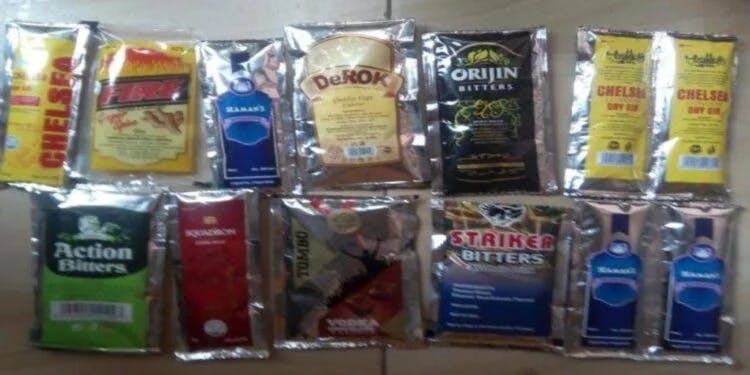
The Executive Secretary of the Food, Beverages and Tobacco Senior Staff Association, Solomon Adebosin, has called on the National Agency for Food and Drug Administration and Control to involve stakeholders in discussions regarding the recent prohibition on alcohol sold in sachets and PET bottles under 200ml.
In a conversation with ARISE News on Tuesday, Adebosin remarked that the regulation, which NAFDAC initiated on January 21, 2026, might unintentionally impact local enterprises and job opportunities.
The agency had communicated on November 11, 2025, its intention to implement a full ban on these products by December 2025, following a Senate directive.
The implementation was temporarily paused after the Federal Government delayed the actions for further discussions.
Nevertheless, Prof. Mojisola Adeyeye, the Director-General of NAFDAC, indicated that the agency has since been instructed by the Senate to move forward with the ban.
She outlined that the purpose of the prohibition is to protect public health and shield at-risk groups, especially children, adolescents, and young adults, from the dangers of excessive alcohol consumption.
Adebosin countered, asserting that sachet alcohol serves a function in moderation and affordability.
He stated, “The argument is that because it is in sachet, it becomes very available, but the reason for these products being available in sachets relates to the current economic situation in Nigeria. We have adopted a search economy concerning many of our available products due to their affordability.”
He continued, “This format also promotes moderation; when you have it in smaller amounts, you consume it and feel satisfied because you are not driven to exceed your limit... What we continuously advocate is responsible drinking and moderation.”
He elaborated, “With this packaging, it is simpler for someone to consume just one sachet and feel fine, as opposed to having to drink from a larger container, where they may end up overindulging.”
Adebosin also voiced his worry for local producers and job security, saying, “The issue we face is that targeting products like these, which are produced by local Nigerians, directly impacts employment.”
“Local entrepreneurs invest significant resources to establish these businesses, providing jobs for both Nigerians directly and indirectly. By closing these operations, the consequences will be detrimental to employment.”
He further cautioned that this prohibition may dissuade foreign investments, stating, “If foreign investors observe how local businesses are treated, they may be discouraged from wanting to invest in Nigeria.”
Adebosin urged NAFDAC to consider alternative solutions, saying, “We should engage in dialogue about this. We can explore various approaches to resolve the problem. A ban should not be our immediate solution... Engaging in discussions could lead to other proposals and a viable resolution to this matter.”
Related Articles

BREAKING: Court orders FCT workers to suspend strike
The National Industrial Court of Nigeria, located in Abuja, has issued a temporary restraining order requested by the Federal Capital Territory Minister, Nyesom Wike, along with the FCT Administration, directing the workers associated with the Joint Union Action Committee to halt their current strike.